Hive DashCam M1
hive dashcam m1
Updated
2 days ago
, by boAt Knowledge Base
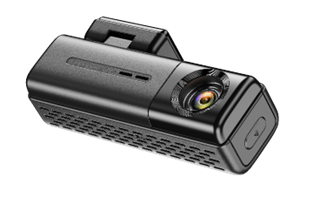
Hive Dashcam M1
The boAt Hive Dashcam M1 captures every detail with stunning 2K resolution and built-in GPS for definitive proof on the road. Secure your vehicle 24/7 with advanced parking modes and massive 512 GB storage capacity. Instant access and control via the HiveCam App makes reliable security simpler than ever.
Specifications
Model | Hive Dashcam M1 |
Screen | 0.96-inch Display |
Video Resolution | 2K (2560 × 1440P) |
USB Interface | USB Type-C |
MIC | Support |
Speaker | Support |
Storage | Supports Up to 512GB (Class 10 U3 Speed) |
Wi-Fi | 1 min / 2 min / 3 min (default 1 min) |
GPS | Built-in |
Operating Temperature | -10°C ~ +60°C |
Storage Temperature | -20°C ~ +70°C |
Installation FAQs
Troubleshooting FAQs
General FAQs
Download the boAt HiveCam app on your device using the QR code. The app is available on both:
App Store (for iOS 12.0+ and above)
Google Play Store (for Android 7.0+ and above)

Step 1: Downloading the boAt HiveCam app on your Device
Download the boAt HiveCam app on your device using the QR code. The app is available on both:
App Store (for iOS 12.0+ and above)
Google Play Store (for Android 7.0+ and above)

Step 2: Register or Log In
Open the HiveCam app: A pop-up message about GPS usage & BT enabling appears, 'Tap Confirm to continue.'
On the login screen: Enter your mobile number and password and agree to the Terms of Service and Privacy Policy.
Finally, tap Login. OR
Skip Login (Optional): If you're unable to receive the verification code or prefer not to register, tap Skip Login in the top right corner. After skipping login, tap Add Device and follow the prompts to connect to your dashcam. The app will automatically scan for available devices. However, this is not recommended, as skipping login will not help you register for warranty and further issue resolution.
Note:
During the initial launch, the boAt HiveCam app will request the following permissions:
Location Access: Needed to retrieve the Wi-Fi name for dashcam pairing. You can select precise or approximate location.
Nearby Devices: Required to detect and connect with your dashcam.
Photos & Media Access: Needed to save and view recordings from the dashcam.
Notifications: The app will prompt you to enable notifications for alerts.
Grant these permissions as prompted to ensure full functionality of the app.

Step 3: Connecting Hive Dashcam M1 via Wi-Fi
Hive Dashcam M1 is a built-in Wi-Fi dash cam. Open the app and tap on the product to proceed.
Make sure that the dashcam is connected to a power supply and turned ON.

Step 4: Connect to Dashcam Wi-Fi
On your phone, go to Settings > Wi-Fi.
Manually select the network named ‘boAt-Hive_Dashcam-M1_XXXXXX (your device’s unique ID).
Enter the default password: 12345678.
Note: The hotspot is without internet and might disconnect. Please select the "Stay Connected even without internet" option when asked by the Settings popup.
Once connected, return to the app and tap ‘Next’.

Step 5: Finalize Connection & Preview
After tapping ‘Next’, the app will display the connected dashcam model.
Tap on the dashcam icon to open the Live Video Preview interface.
Now you can view the video currently being recorded in real-time by connecting your smartphone to the dashcam via Wi-Fi Direct.
Please STOP recording first, then press the ‘Device Album’ to get photos, videos, and emergency files.
Note: To ensure connectivity, please always connect to a power supply.
Location Access: Needed to retrieve the Wi-Fi name for dashcam pairing. You can select precise or approximate location.
Nearby Devices: Required to detect and connect with your dashcam.
Photos & Media Access: Needed to save and view recordings from the dashcam.
Notifications: The app will prompt you to enable notifications for alerts.
Stop recording → Go to “Device Album” in app → Select and download files → Saved under “Local Video.”
Stop recording → Go to “Device Album” in app → Select the file → Tap on Trim option on selected video → Download files → Saved under “Downloaded Files.”
Go to Profile > Account Management, from here, you can access the following options:
Reset Password
Delete Account
Log Out
Navigate to Profile > Clear Cache, select Clear App Cache, and tap Confirm to proceed.
This clears temporary app data to improve performance and resolve minor app issues without deleting your account or recordings.
This option allows users to report app issues, share feedback, and help improve app performance.
Go to Profile > Feedback.
Enter the issue details (up to 150 characters), upload up to 2 photos or 1 video (optional), add your phone number or email, Device Log File (optional), and App log file (optional; can be enabled or disabled).
Tap Confirm to submit feedback.
Access via Dashcam menu and it will take you to the following features:
Video Resolution
Loop Recording
Audio Record
G-Sensor
Parking Mode
Fatigue Driving Reminder
Screen Saver
Volume
Boot Ringtone
Voice control
Voice Command
Date/Time: This feature allows you to select the date format
Options: YY/MM/DD / MM/DD/YY / DD/MM/YY (Default)
Speed Unit: Choose your preferred unit for speed display.
Options: MPH / KM/H (Default)
GPS info: The GPS info screen allows you to check satellite information, longitude, latitude, and
speed.
Select your preferred video resolution and frame rate for the dashcam.
Options: 2560x1440p (Default) / 1920x1080p 30fps.
With loop recording features on, when the memory card is full, the dashcam automatically overwrites the oldest files to continue recording.
Set the loop recording duration to 1, 2 and 3 minutes based on your preference.
Note: Keep loop recording on to ensure continuous video capture without manual file deletion.
This feature allows the dashcam to capture ambient sound along with video recordings. When enabled, conversations and background noises inside the vehicle will be recorded.
Options: On (Default) / Off
G-sensor is a 3-axis impact gravitational accelerometer, designed to detect physical and gravitational forces on the dashcam.
Once the G-sensor has been triggered due to physical or gravitational impact force on the camera, the current video file will be locked as an emergency file, so it won't be deleted by loop cycle function.
The higher the G-sensor sensitivity is, the less force will be needed to trigger automatic file protection.
Options: Off/ Low (Default)/Medium/High
When you activate this feature, the dashcam will beep every 2 hours to remind you if you are experiencing fatigue while driving.
App Options: Off (Default) / 1H / 2H / 4H
The Screen Saver feature configures how the dashcam screen behaves during periods of inactivity.
Screen Saver Off (Default): The screen remains on continuously.
Screen Off After 1 Minute: The screen automatically turns off after 1 minute of inactivity while the dashcam continues recording in the background.
This feature allows you to set the volume level for the boot sound volume, prompt volume through the camera’s internal built-in speaker.
Options: Off / Low / Medium (Default) / High
This feature allows you to turn ON/OFF the camera’s boot ringtone.
Options: Toggle On / Off
Voice Control enables hands-free operation of your dashcam through predefined commands. Note: The voice control feature has an accuracy of approximately 90% and may occasionally be triggered by surrounding environmental noise. If this function is not required, it can be disabled from the settings menu in the companion app.
Options: On (default) / Off
When the voice command feature is turned ON, you can speak specific voice commands to control
various dashcam functions without pressing any buttons. Refer to the available controls for this feature:
Show front camera: Switches the display to the front camera view
Show rear camera: Switches the display to the rear camera view
Turn on screen: Turns on the display screen
Turn off screen: Turns off the display screen
Take picture: Captures a still photo
Lock the video: Locks the current video recording to prevent it from being overwritten
Turn on audio: Enables microphone audio recording
Turn off audio: Disables microphone audio recording
Turn on Wi-Fi: Activates Wi-Fi to connect with the smartphone app
Turn off Wi-Fi: Deactivates Wi-Fi functionality
The "Parking Mode" function will ONLY work when the 3-Lead Hardwire Kit is installed properly. This parking mode has three options to choose from:
Time-Lapse Parking Mode Working Time:
When you turn OFF the car's engine and switch the key to the lock position. Then the camera will STOP the continuous video recording, and it will go into the timelapse 1fps recording mode automatically.
While the timelapse is being recorded, if an external impact or vibration is detected that meets the set G-sensor level, the camera will automatically record a 1-minute continuous video, save and lock it in the Event folder, and then resume timelapse recording at 1 fps.
When you start your car for the next time, the camera will automatically STOP the timelapse parking mode. Then it will go into normal video mode automatically to start the continuous video recording.
Collision Detected Parking Mode:
When you turn OFF the car's engine and switch the key to the lock position. Then the camera will STOP the continuous video recording, and it will go into the impact detection mode, and the camera will turn OFF.
While, in impact detection mode, if any external impact or vibration is detected that meets the set G-sensor level, then the camera will turn ON > and it will start to record 1 min. continuous video, save & lock that video in the event folder > then the camera will turn OFF.
When you start your car for the next time, the camera will automatically switch back to normal video mode automatically to start the continuous video recording.
Normal Recording Parking Mode:
When the car engine is turned off and the key is in the lock position, the dashcam will continue recording as usual.
The dashcam then switches to impact detection mode. If any external impact or vibration is detected that meets the preset G-sensor level, the current video clip will be automatically locked and saved in the event folder. After saving the file, the dashcam resumes normal recording.
Note: Even though the device has a provision of attaching an external hardwiring kit for parking mode, it is not recommended. The brand will not be responsible for any issues arising from the use of third-party or non-provided accessories.
The dashcam allows you to display specific information on recorded video files. You can enable or disable the following stamps from the settings menu:
Speed: Displays the current driving speed.
GPS Information: Displays GPS coordinates and related data.
Date/Time: Displays the date and time of recording.
Logo: Displays the device logo on recordings.
Model: Displays the dashcam model name.
Date/Time: This feature allows you to select the date format. Options: YY/MM/DD / MM/DD/YY / DD/MM/YY (Default)
Speed Unit: Choose your preferred unit for speed display. Options: MPH / KM/H (Default)
GPS info: The GPS info screen allows you to check satellite information, longitude, latitude, and speed.
Synchronization Time: Synchronize the dashcam’s date and time with your smartphone through the app to maintain accuracy.
SD Card Information: Displays the remaining storage space on the inserted Micro SD card.
Format SD Card: Formats the Micro SD card to ensure the file system is optimized for recording.
Wi-Fi
Default Settings: Restore the dashcam to default system settings. Recordings will not be affected.
Firmware Version: View the current firmware version installed on the dashcam.
Go to "Default Settings", click on reset and then click on confirm.
It will restore the dashcam to default system settings and the recordings will not be affected.
To change the wi-fi password:
Wi-Fi Name: Change the Wi-Fi name (SSID) through the app.
Wi-Fi Password: Change the Wi-Fi password through the app.
Default wi-fi password is 12345678
The Hive Dashcam M1 allows the Micro SD card to be formatted directly through the system settings or using the Wi-Fi Key.
Format via System Settings:
Go to Dashcam Settings > System Settings > Format SD Card.
Confirm the action to format the card.
Restarting the dashcam after formatting is recommended.
Once formatting is complete, it is recommended to restart the dashcam (optional) to ensure changes are applied properly.
Format with the Wi-Fi Key:
Press and hold the Wi-Fi Key for 8 seconds until a confirmation sound is heard.
Note: For optimal performance, format the Micro SD card periodically (e.g., every 1 to 2 months), if used frequently.
Wi-Fi Direct connection allows real-time video access in the boAt HiveCam app. Refer to the steps below to proceed.
Open the boAt HiveCam App: Once connected, your dashcam model will appear on the screen. Tap Check
Real-Time Video to open the live preview window.
The boAt HiveCam app lets you access, preview, and download your dashcam’s
recorded media with ease.
Stop Recording First: Before accessing stored media, stop the ongoing recording.
Open Dashcam Albums: In the boAt HiveCam app, tap Dashcam Albums to browse your Photos, Videos, and
Emergency Files.
Select and Download Files: Choose the files you want to download, then tap the Download icon to begin.
(Note: Downloading may take some time depending on the file size.)
View Saved Media: Access your downloaded files under the Downloaded Files section within the app.
Go to Live Video Preview > Tap on Snapshot > Snapshot will be saved to Device Albums > Photos Tab
Stop recording → Go to “Device Album” in app → Select the file → Tap on Trim option on selected video → Download files → Saved under “Downloaded Files.”
Ensure the dashcam is powered ON. Insert a pin or paperclip into the Reset pinhole and press gently for 2–3 seconds.
Release and allow the dashcam to reboot.
Offline Maps are available exclusively on Android devices. When the smartphone is connected to the dashcam Wi-Fi, the mobile network is disabled. In such cases, users can use downloaded maps for navigation.
Steps to download the offline maps: From App Home > Profile > Offline Maps > Download Offline Maps .
You may face issues like photo not getting captured or any other issues while using the app. You can try to:
Attempt Formatting the SD Card
Restart the device
Go to the Dashcam Preview interface.
Please STOP recording first, then press the ‘Dashcam Albums’ to get photos, videos, and emergency files (event tab).
Select the media files to download onto your device. Go to Event tab to download the emergency event videos.
Press the download icon to save the media files. Trim the video duration as per your requirement, then wait for the download to complete.
Then you can find these downloaded media files in APP original interface menu named ‘Downloaded Files’.
SR Synthesis allows you to view route details, steering wheel direction, vehicle acceleration, and vehicle speed as on-screen data stamps on downloaded videos.
Steps to Enable SR Synthesis:
Stop the ongoing recording.
Go to Downloaded Files.
Open the Videos / Event folder.
Tap SR Synthesis to process the video with SR data.
Open SR / Close SR to view/hide the video with SR data overlays.
Note: Since E1 doesn’t have in-built GPS functionality so SR Synthesis video won’t work as expected.
Connect Dashcam to car charger via Type-C cable.
Engine ON → Dashcam powers on and starts recording automatically.
Engine OFF → Dashcam powers down.
Insert U3 Class 10 micro SD (up to 256GB) with gold contacts facing lens.
Push until click.
To remove, push until pop-out.
The Wi-Fi range is maximum 10 ft without obstacles.
The Wi-Fi key functions are:
Short press: Toggle Wi-Fi ON/OFF.
Double press: Toggle Audio ON/OFF.
Long press (3s): Lock video (Emergency Video)
Long press (8s): Format microSD & restore defaults.
Settings > System Settings > WiFi > set a new password from here.
Continuous recording: Enabled by default.
Loop recording: Set to 1 min (default).
G-Sensor: Triggers emergency lock during impact
The device announces events like:
“Wi-Fi is on”
“Recording started”
“Emergency video locked”
“Please insert TF card”
Time-Lapse (1fps with impact-triggered 1-min clip)
Collision Detection (camera off until impact detected → auto ON for 1-min recording).
Continuous recording is enabled by default.
Loop recording is set to 1 min (default). The options are 1 min / 2 min / 3 min.
Power buttons turn the dashcam on/off
Long press to power the device on or off.
To Insert the Micro SD card:
Make sure the camera is turned OFF first.
Hold the card with the metallic gold side (gold contacts) facing the lens (front of the camera).
Insert the card halfway into the slot, then gently push it inward using your fingernail or a blunt object (e.g., a paperclip) until it clicks and locks into place.
To Remove the Micro SD Card: To remove the Micro SD card, gently push its edge inward until it clicks and then pops out, then simply pull it out of the slot.
Note: When the Micro SD card is removed from the camera, the dashcam appears offline, and recording will stop.
The Hive Dashcam M1 allows the Micro SD card to be formatted directly through the system settings or using the Wi-Fi Key.
Format via system settings:
Go to System Settings > Format.
Confirm the action to format the card.
Restarting the dashcam after formatting is recommended.
Once formatting is complete, it is recommended to restart the dashcam (optional) to ensure changes are applied properly.
Format via Wi-Fi key: Press and hold the Wi-Fi Key for 8 seconds until a confirmation sound is heard.
Note: For optimal performance, format the Micro SD card periodically (e.g., every 1 to 2 months), if used frequently.
This feature lets you:
Pair your dashcam with your smartphone wirelessly.
View, download, and share recordings easily.
The Wi-Fi range is maximum 10 ft, assuming there are no obstacles.
Just like your home Wi-Fi doesn’t work outside the house, this dashcam’s Wi-Fi is local and limited to proximity.
The Wi-Fi key functions are:
Short press: Enables/Disables Wi-Fi
Double press: Enables/Disables Audio Recording
Long press (3s): Locks video.
Long press (8s): Format microSD & restores default.
Red (Blinking): Recording normal video.
Yellow (Blinking): Recording locked video.
The parking monitoring requires a hardwire kit (to be purchased separately from the market).
Once installed, it enables motion- or impact-triggered recording even when the car is off. However, purchasing an outside Hardwiring Kit is not recommended.
Yes. Connect the dashcam to your phone via Wi-Fi using the boAt HiveCam app to preview, download, or manage recordings.
No. The Dashcam does not support cloud/remote streaming.
It works only within 10 ft via Wi-Fi
